
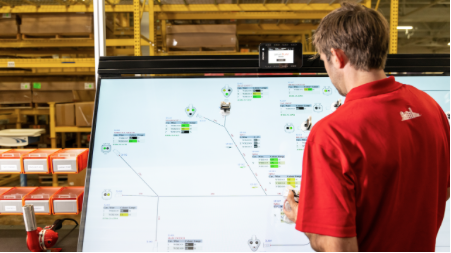
In today’s manufacturing environment, knowing how a product was built is just as important as building it correctly. Traceability has become a core requirement in the wire harness manufacturing process.
As products become more complex and industries face stricter regulatory oversight, manufacturers are under increasing pressure to prove exactly how every harness was built. Customers expect full visibility into quality, and compliance standards require detailed documentation tied directly to the original electrical engineering drawing.
Manufacturers that have adopted digital workflows are already seeing measurable improvements:
These gains are not only about speed. They are also about control. Traceability plays a critical role in ensuring that faster production does not come at the expense of quality or compliance.
Many manufacturers still rely on paper-based documentation or disconnected digital files to track production.
This often includes:
While these methods may meet basic requirements, they introduce gaps in the wire harness assembly process.
Records can be incomplete, difficult to access, or inconsistent across teams. When issues arise, reconstructing what actually happened during a build becomes time-consuming and unreliable.
In regulated industries, audits require clear evidence of how each harness was produced.
With paper-based systems, this process can be challenging:
As a result, audit preparation becomes a manual effort that consumes valuable engineering and quality resources.
More importantly, incomplete traceability increases the risk of non-compliance, which can lead to delays, penalties, or lost business.
When a defect is identified, the ability to trace it back to its source is critical.
However, in traditional environments:
This makes root cause analysis difficult.
Teams may know that a failure occurred, but not why it happened or how to prevent it from recurring. Over time, this leads to repeated issues and increased rework across the wire harness manufacturing process.
Modern manufacturing systems address these challenges by embedding traceability directly into the process.
Instead of relying on manual documentation, digital platforms automatically capture a complete build history for every harness.
Platforms such as Cadonix smartBuild create a connected record that includes:
This information is captured in real time, without adding extra steps for technicians.
One of the most important advantages of digital traceability is the connection between design and execution.
By linking wire harness software directly to the manufacturing environment, every build is tied back to a single source of truth.
This ensures that:
This level of integration eliminates the disconnect that often exists between design and production.
Digital traceability provides more than just records. It creates actionable insights.
With access to real-time data, manufacturers can:
This enables faster, more informed decision-making and supports continuous improvement.
In addition, having a complete and accessible digital record simplifies audits and demonstrates compliance with industry standards.
As expectations continue to rise, traceability is no longer optional in the wire harness manufacturing process.
Paper-based systems and disconnected records cannot provide the level of visibility and control required in today’s environment. They limit accountability, slow down audits, and make it difficult to resolve quality issues effectively.
Digital traceability, built directly into the manufacturing workflow, offers a more reliable approach. By capturing every step of the process and connecting it to the original design, manufacturers can improve quality, ensure compliance, and build with greater confidence.
To see how digital build records can improve traceability, quality, and compliance in your wire harness manufacturing process, explore the smartBuild brochure.
Whether you’re reducing formboard lead times or transitioning to digital build stations, smartBuild by Re:Build Cadonix removes manual complexity from harness assembly so your teams can build faster, with higher quality, and complete confidence from design through testing.