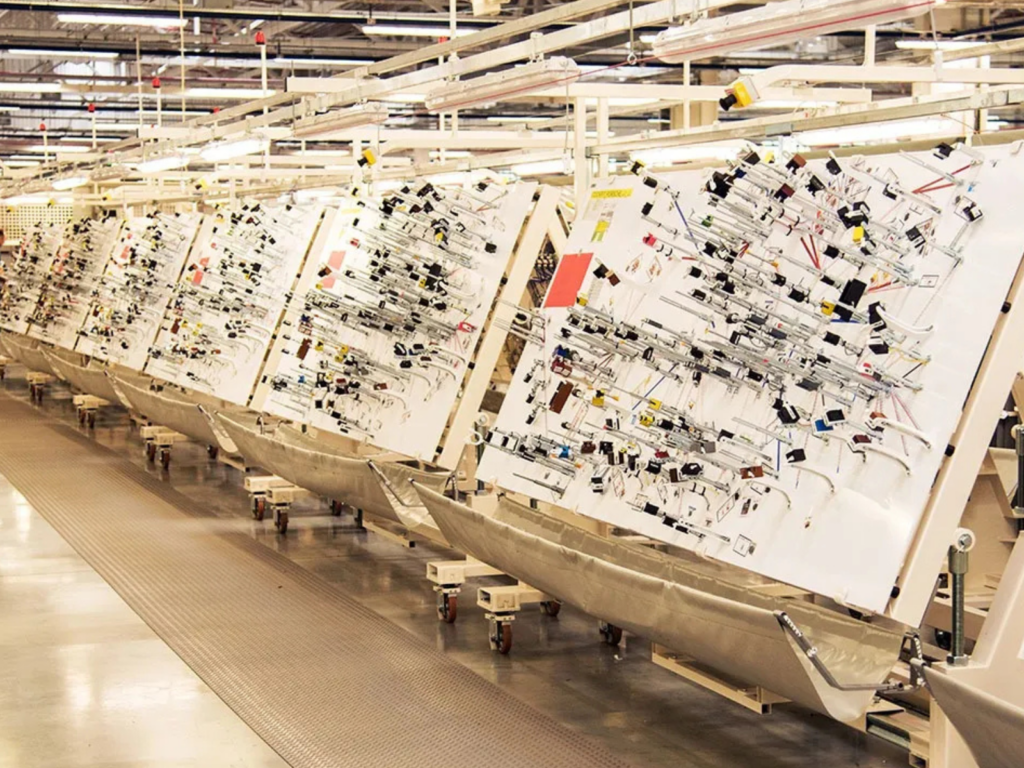
What Happens When Wooden Formboards Lag Behind Design

There’s a better way to manufacture: cut build time by 50%, save five days, and eliminate build failures.

One autonomous defense manufacturer reduced time and resources by 50%, saved five days per formboard setup, and achieved zero build failures across eight wire harnesses after digitizing its workflow.


Those results were not incremental improvements. They were the outcome of connecting the wiring harness directly to the wire harness manufacturing process using smartBuild.

The Challenge

If you are still building from static or manually updated formboards, you are likely absorbing hidden costs in rework, scrap, delays, and version control errors. In complex environments, outdated formboards do not just slow you down. They create failure points across the entire wire harness assembly process.

The Risk of Building from Outdated Formboards

Every wire harness begins with a wiring harness schematic. Engineering finalizes the design in ECAD. Connectors are selected. Splices are defined. Wire lengths are calculated.

But what happens next often breaks the digital chain.

In many organizations, the wire harness software used for design is disconnected from production. The harness design data is exported. Drawings are printed. Formboards are manually created or modified. Build stations are configured based on static documentation.

The moment a design change occurs, the system begins to drift.

In the defense case study, our customer needed to design and assemble more than 15 custom multi-branch cable wire harnesses in less than one month, with no infrastructure to support the demand. Traditional contract manufacturing would have been too slow and too expensive.

With manual formboard processes, setup alone could take up to five days per harness before production even began. In high-pressure prototyping cycles, that delay is unacceptable.

Outdated formboards introduce risk in several ways:

  • Incorrect wire lengths due to overestimation
  • Mismatched revisions between harness design in the CAD software and design in the board
  • Build failures discovered at test
  • Excess material waste
  • Lost time retraining technicians

When the wiring harness design evolves but the formboard does not, the wire harness manufacturing process becomes reactive instead of controlled.

How Manual Updates Fall Behind Design Changes

Engineering changes are inevitable. Routing adjustments. Component substitutions. Packaging constraints. Performance improvements.


In a disconnected workflow, each change triggers manual steps:

  1. Update the harness design
  2. Reissue manufacturing documentation.
  3. Reprint or rebuild the formboard.
  4. Reconfigure the build station.
  5. Retrain technicians on the new revision.


Each step adds delay and introduces the possibility of human error.


In fast-moving industries such as defense and autonomous systems, the cost of lag between design and production can be severe. Testing schedules slip. Prototype validation is delayed. Competitive advantage erodes.


In the case of our customer, they needed rapid revisions in real time because their projects were moving quickly. Static documentation could not support that pace.


When your wire harness software does not drive the formboard directly, you create a bottleneck between engineering and manufacturing.

The Solution: smartBuild with Live ECAD-Driven Formboard Data

smartBuild, integrated within Cadonix Arcadia, digitizes the formboard and connects it directly to live ECAD harness design data.


Instead of exporting static drawings, manufacturers drive the wire harness assembly process from approved harness design data.


In the defense deployment:

  • Designing a new digital formboard took 30 minutes
  • Build station setup took another 30 minutes
  • Total setup time dropped from five days to one hour


Technicians could begin building immediately after harness design approval.


The impact on the wire harness manufacturing process was measurable:

  • 50% reduction in time and resources
  • Zero build failures across eight harnesses
  • One early design error caught before assembly
  • Reduced material waste by eliminating overestimation of wire lengths
  • Thousands saved annually by eliminating large format printing and storage


The digital formboard ensures that the wiring harness design and the production floor remain synchronized. When a revision is approved, the build environment reflects it.


smartBuild also improves workforce scalability. New technicians were productive on day one using visual instructions and highlighted wire paths. Multiple technicians can collaborate on the same harness while maintaining version control and consistency.


This is what modern wire harness software should deliver: a connected, traceable, and revision-controlled wire harness assembly process.

Do Not Let Formboards Become Your Weak Link

Outdated formboards are not a minor operational inconvenience. They are a structural flaw in the wire harness manufacturing process.


The Autonomous Defense Drone Systems case study proves what is possible when the wiring harness design, digital formboard, and production floor operate as one connected system:

  • 50% reduction in time and resources
  • Five days saved per harness setup
  • Zero build failures
  • Day-one technician productivity


If your current wire harness software cannot keep design and build synchronized, the cost is already showing up in rework and delay.


Download the full Autonomous Defense Drone Systems case study to see how smartBuild transforms the wire harness assembly process and eliminates rework caused by outdated formboards.

Get Started

Whether you’re reducing formboard lead times or transitioning to digital build stations, smartBuild by Re:Build Cadonix removes manual complexity from harness assembly so your teams can build faster, with higher quality, and complete confidence from design through testing.