How Modern ECAD Tools Are Changing EV Harness Design

Electric vehicles have changed the rules of electrical design. High-voltage architectures, tighter safety requirements, and rapid platform evolution place new pressure on engineering teams. What once worked for traditional vehicles now struggles to keep pace with electrification. At Cadonix, we see firsthand how EV harness design now demands more precision, more flexibility, and far greater visibility across the entire development process.


As EV programs scale, teams must manage growing configuration complexity while maintaining strict compliance and safety standards. These challenges expose the limitations of legacy harness tools and are driving manufacturers toward modern ECAD platforms like Arcadia, designed specifically to support the demands of electric mobility and the realities of today’s EV development cycles.

Why Traditional Harness Tools Fall Short

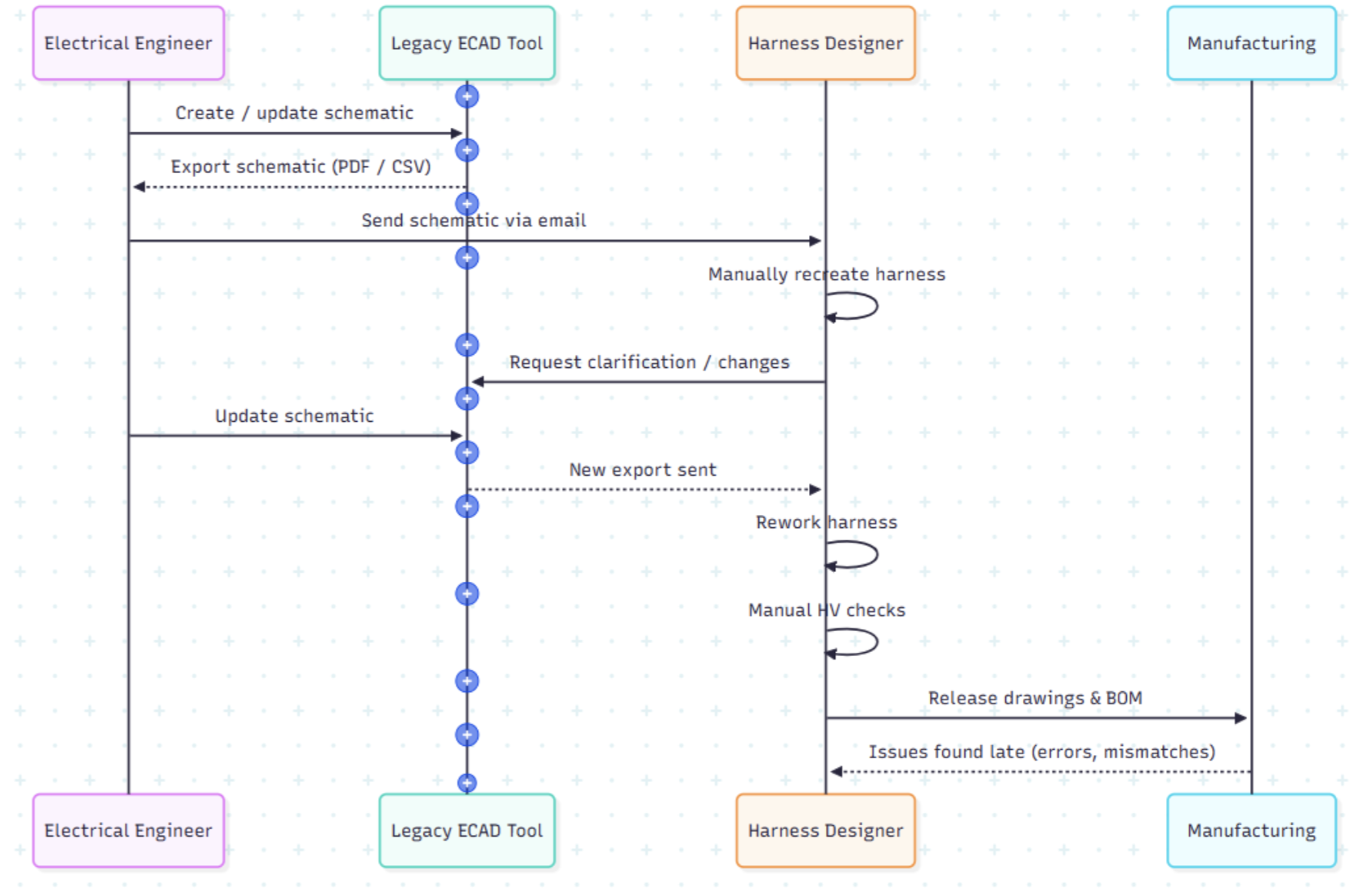
Traditional harness design tools were created for simpler systems. They rely heavily on manual updates, static drawings, and disconnected data. In an EV environment, that approach quickly breaks down.


High-voltage routing introduces strict spacing, shielding, and segregation requirements. Battery systems, inverters, and charging components add layers of complexity that legacy tools cannot validate automatically. When schematic changes fail to flow cleanly into the harness, errors slip through and rework follows.


Version control also becomes a major risk. EV programs evolve rapidly, with frequent design updates driven by performance, range, or regulatory changes. Teams using disconnected ECAD workflows struggle to keep schematic and harness data aligned. As a result, manufacturing receives incomplete or outdated information, which increases cost and delays.


Without intelligent rule checks and real-time synchronization, traditional tools simply cannot support the pace and precision EV development requires.


How Modern ECAD Transforms EV Harness Design

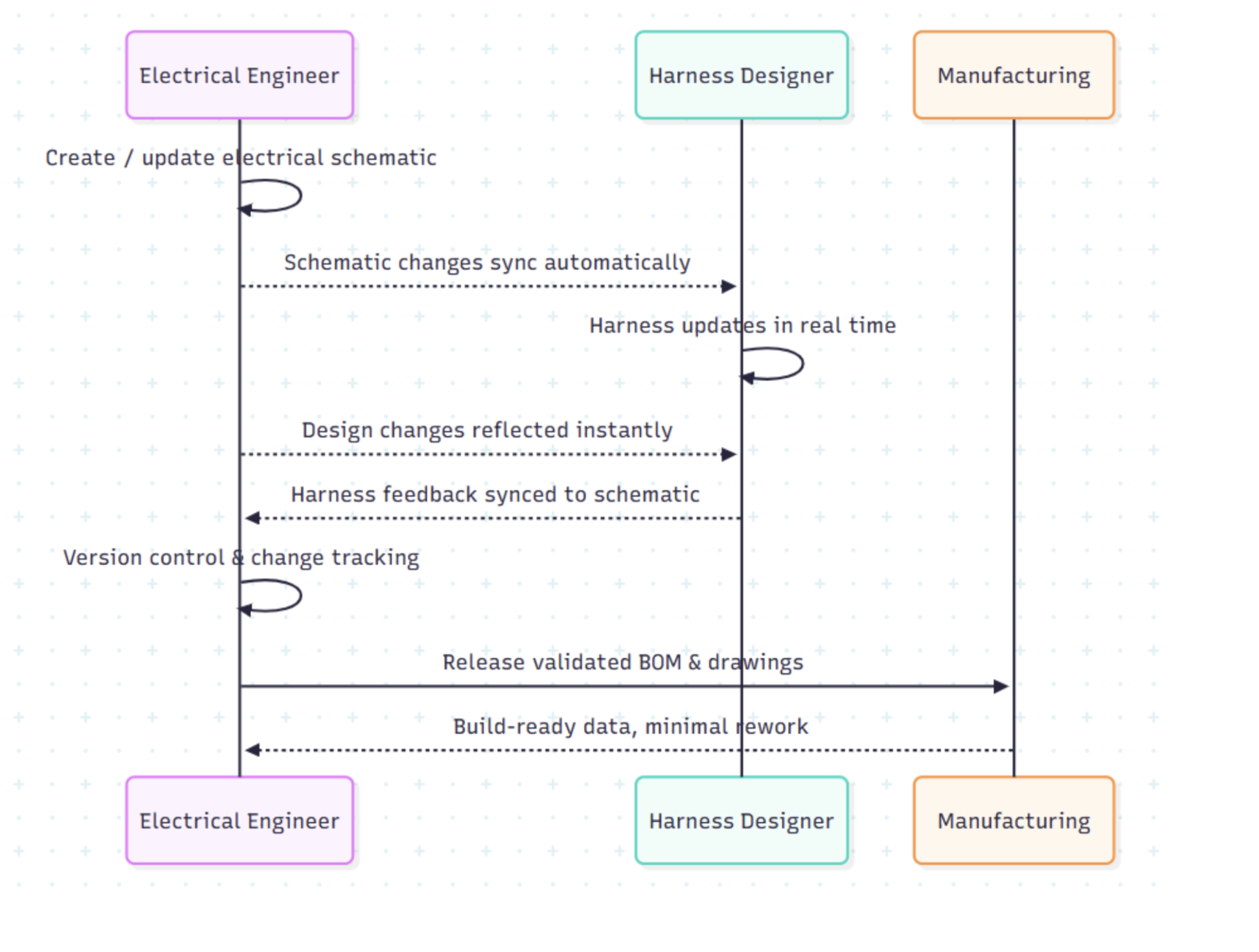
Modern ECAD platforms address these challenges by connecting the entire electrical design workflow in one environment. Engineers work from a single source of truth where schematic, harness, and manufacturing data stay synchronized at all times.


For EV programs, this means high-voltage systems receive the attention they demand. Modern ECAD supports clear separation of voltage domains, automated validation of routing rules, and consistent application of safety constraints. When engineers update a schematic, the harness reflects those changes instantly, reducing the risk of downstream errors.


Cloud-based collaboration adds another layer of value. Distributed teams can review designs in real time, resolve issues faster, and maintain alignment across global engineering and manufacturing sites. Built-in intelligence replaces manual checks and helps teams adhere to standards without slowing development.


Arcadia exemplifies this approach by giving EV engineers a browser-based ECAD environment that scales with complexity. By unifying data and automating critical checks, Arcadia helps teams move faster while maintaining accuracy and compliance.

Future-Proofing EV Harness Workflows

As EV platforms continue to evolve, engineering teams must adopt workflows that scale with complexity rather than fight it. Future-proofing starts with a connected ECAD foundation that supports rapid change, real-time collaboration, and intelligent validation.


Teams should focus on eliminating manual handoffs, reducing data duplication, and ensuring that every design change flows seamlessly from schematic through harness to manufacturing. With the right ECAD platform in place, EV programs gain the agility they need to adapt without sacrificing quality or safety.


Modern ECAD tools do more than support EV harness design. They enable engineering teams to build safer, smarter vehicles while keeping pace with an industry that never slows down.


Arcadia fits naturally into this shift toward modern ECAD. Built as a cloud-based platform, Arcadia connects electrical schematics, wire harness design, and manufacturing outputs in a single environment. For EV programs, this means high-voltage architectures, safety constraints, and configuration changes stay synchronized across the entire design process. By replacing disconnected workflows with a single source of truth, Arcadia helps engineering teams manage complexity, reduce risk, and deliver EV harness designs with greater speed and confidence. 


Ready to design EV harnesses without the risk and rework of legacy tools?


Arcadia was built for modern EV programs—connecting schematics, harness design, and manufacturing in a single, cloud-based ECAD platform purpose-built for high-voltage systems and rapid change.


See how leading EV teams reduce errors, accelerate development, and stay compliant—start your free trial today.